A Checklist for Hiring Senior Leadership Roles
Aug 5, 2025 – 8 min read

Hiring senior leaders isn’t just another HR process. It’s one of the most consequential business decisions your organization will ever make. The right executive can drive growth, align teams, and build lasting momentum. The wrong hire can cost millions, fracture culture, and stall strategy.
This checklist is designed to guide boards, founders, and HR leaders through the critical steps of senior leadership hiring—from defining the role to onboarding with purpose. Whether you’re hiring a CFO, COO, or VP of Operations, these steps will help you recruit with confidence and precision.
1. Define the Role Beyond the Job Description
A job description lists responsibilities. A leadership profile defines impact.
- Clarify the business outcomes you expect from this leader in the first 12–24 months.
- Identify what’s non-negotiable: industry expertise, regulatory knowledge, or financial oversight.
- Define cultural expectations: leadership style, communication norms, DEI values.
- Create a written “success profile” to align all stakeholders.
Pro Tip: Don’t recycle last year’s job description. Senior leadership needs shift with business cycles, investor expectations, and growth strategy.
2. Align Stakeholders Before You Search
Nothing stalls an executive search like internal misalignment.
- Gather input from the board, CEO, HR, and direct reports.
- Confirm consensus on priorities (e.g., scale readiness vs. turnaround experience).
- Agree on decision-making authority: Who has final say, and what’s the approval process?
- Align on compensation philosophy before candidates are in play.
Pro Tip: Run a short alignment workshop to surface differences early, not during final interviews.
3. Choose the Right Search Model
Executive hires aren’t the place for guesswork. Decide whether to:
- Engage a contingency recruiter (speed-focused, less depth).
- Partner with an executive search firm (strategic, confidential, high-touch).
- Leverage a hybrid approach for urgent but specialized roles.
Evaluate partners on:
- Industry expertise
- Assessment methodology
- Access to passive talent
- Guarantees and post-placement support
4. Build a Candidate Sourcing Strategy
Senior leaders rarely apply on job boards. To reach the right talent:
- Tap into passive candidate networks.
- Use industry events, board connections, and referrals.
- Ensure your brand message is consistent and compelling.
- Protect confidentiality if the role involves sensitive transitions.
Pro Tip: Position the role as an opportunity, not just a vacancy. Executives want to know how they’ll shape the company’s future.
5. Screen for Both Competence and Culture
A resume can show accomplishments. Interviews must uncover alignment.
- Use competency-based assessments to evaluate technical and leadership skills.
- Conduct structured interviews to reduce bias and improve consistency.
- Include cultural fit assessments: Does the leader thrive in collaborative, high-growth, or turnaround environments?
- Vet through references and backchannel conversations.
Pro Tip: Add scenario-based interviews: “How would you lead a 90-day plan to stabilize cash flow while preparing for an acquisition?”
6. Streamline the Interview Process
Senior candidates won’t wait through six weeks of unclear scheduling.
- Define interview stages in advance (screening, stakeholder panel, case study).
- Keep the process under 45 days when possible.
- Provide clear, respectful communication at every stage.
- Involve key decision-makers early, not after candidates are emotionally invested.
7. Comp Package: Balance Market Data with Flexibility
Compensation is a conversation, not a surprise at the offer stage.
- Benchmark compensation using real-time market data.
- Consider total rewards: base, bonus, equity, benefits, flexibility.
- Be upfront about budget bands from the start.
- Allow room for negotiation, especially for top-tier passive candidates.
8. Manage Confidentiality and Brand Reputation
Every interaction reflects on your company’s brand.
- Limit the number of recruiters representing your role to avoid mixed messaging.
- Ensure confidentiality in sensitive searches (e.g., replacing a sitting leader).
- Deliver consistent candidate experiences: respectful, timely, and transparent.
9. Make Data-Driven Hiring Decisions
Gut instinct alone isn’t enough.
- Use structured scorecards to compare candidates objectively.
- Track assessment results, interview feedback, and reference themes.
- Weigh alignment with the success profile you defined at the start.
Pro Tip: Involve a third-party facilitator if stakeholders are deadlocked.
10. Onboard with Intentionality
Hiring doesn’t end at offer acceptance.
- Create a 90-day onboarding plan that includes culture immersion and key relationship-building.
- Provide access to mentors, board members, and critical stakeholders.
- Schedule regular check-ins between the new leader and executive team.
- Measure impact milestones at 30, 60, and 90 days.
Pro Tip: Pair new leaders with an internal sponsor who accelerates cultural integration.
Senior Leadership Hiring Checklist
Here’s the condensed version you can print, share, or run through with your team:
- Define a success profile (not just a job description)
- Align all stakeholders on role priorities and compensation
- Select the right recruitment model (contingency, executive search, hybrid)
- Build a sourcing strategy focused on passive talent
- Screen for cultural fit and leadership competence
- Keep the interview process structured and timely
- Benchmark comp and set expectations early
- Protect brand reputation and confidentiality
- Use data-driven scorecards to evaluate finalists
- Provide a 90-day onboarding roadmap with milestones
Final Thoughts
Senior leadership hires set the tone for your company’s next chapter. The difference between a leader who thrives and one who falters comes down to preparation, alignment, and process. This checklist can’t eliminate every hiring risk—but it can give you the structure to reduce costly missteps and secure the right leader at the right time.
At The Hiring Advisors, we help companies turn executive search into a competitive advantage. Our process blends technology, market intelligence, and cultural insight to deliver leaders who not only fit the role but elevate it.
Book a free consultation to discuss your next senior hire.
How Technology is Changing Executive Recruiting
July 22, 2025 – 8 min read

The hiring game at the executive level is changing, and fast. Boards and hiring managers no longer rely on a stack of resumes and a gut feeling to choose their next CFO, CTO, or VP. Technology is reshaping how we identify, evaluate, and engage top leadership talent. And for companies that want to stay competitive, understanding how to integrate these tools into your recruiting process is essential.
The Tech-Driven Shift in Executive Search
The traditional executive search process was built on personal networks and long cycles of manual screening. While relationships still matter, the tools used to find and assess talent are undergoing a massive transformation. From AI-powered sourcing to predictive analytics, the recruitment process is becoming faster, smarter, and more efficient.
In fact, leading firms are using these tools not just to find candidates, but to deeply understand them—before the first conversation ever happens.
AI Is More Than a Buzzword
Artificial intelligence (AI) has become foundational to modern recruiting. In executive search, it’s being used to:
- Analyze leadership profiles for key competencies, growth patterns, and red flags
- Score resumes against both role criteria and company culture fit
- Uncover passive candidates who are likely open to a move based on behavioral signals
What used to take weeks—searching databases, reviewing LinkedIn profiles, writing outreach—can now be streamlined in hours with the right tech stack. But here’s the nuance: technology doesn’t replace executive recruiters. It augments them.
The best firms are using AI as a partner, not a decision-maker.
Smarter Candidate Assessments
Forget stock personality quizzes or generic “leadership styles.” Tech-enabled executive recruiting uses adaptive assessments and machine learning to gauge a leader’s potential impact in a specific company culture.
We now have tools that can evaluate how a candidate:
- Handles ambiguity in high-growth environments
- Leads through change or crisis
- Aligns with stakeholder priorities (e.g., boards, PE firms, founding teams)
Some platforms even provide insight into a candidate’s digital footprint and public sentiment—a powerful layer when vetting high-visibility hires.
Example: One CFO candidate’s resume checked every box. But predictive assessments flagged mismatched conflict-resolution styles with the CEO. That insight allowed us to shift focus before an offer was ever extended—saving the client a costly mis-hire.
Data That Drives Faster, Better Hires
Recruiters now rely on real-time market intelligence to:
- Benchmark compensation for niche executive roles
- Track industry talent movement and trends
- Understand where leadership candidates are relocating and why
This data arms hiring managers with facts instead of assumptions. You can confidently answer:
- “What should we be paying a VP of Ops with medtech experience in LA?”
- “Which industries are shedding senior talent and where can we capitalize?”
- “Is hybrid or remote leadership feasible for this role?”
For fast-moving companies, this speed and clarity is a competitive edge.
Human + Tech = Better Outcomes
Tech should never replace nuance. It can analyze data, but it can’t sense hesitation on a Zoom call or pick up on misalignment between words and tone. That’s where experienced executive recruiters make the difference.
Technology can identify potential. Recruiters confirm readiness.
The sweet spot lies in knowing when to use data and when to trust judgment. The best search partners blend both.
Tech Stack to Watch in Executive Search
For companies exploring tech-enabled hiring solutions, here’s a shortlist of tools shaping the future of executive recruiting:
- LinkedIn Recruiter + AI Enhancements – Intelligent profile matching based on behavioral data
- HireLogic – Transcribes and scores candidate interviews for key themes
- Loxo AI – Automates sourcing and outreach with advanced filters
- Predictive Index + Plum.io – Behavioral and cognitive assessments for leadership roles
- Glassdoor + TalentNeuron – Talent market analytics by geography and industry
While not every company needs every tool, even small improvements in candidate scoring, outreach, or interview analysis can lead to dramatically better hires.
Questions to Ask Your Recruiting Partner
Thinking about working with an executive search firm? Here are five questions to ask to ensure they’re using technology the right way:
- What tech platforms do you use in your sourcing process?
- How do you ensure assessments are tailored to my company’s culture?
- Can you show examples of how tech helped avoid a bad hire?
- Do you use data to benchmark salary and market availability?
- How do you balance tech insights with human decision-making?
If the answers feel vague or outdated, it might be time to upgrade your search partner.
Looking Ahead
The next decade of executive hiring will belong to companies that master the balance of tech and human insight. AI can surface potential, but it takes seasoned recruiters to decode whether a candidate is not just qualified, but ready to lead, align, and grow with your company.
Hiring leaders is too important to be left to outdated methods. The right tech doesn’t just make hiring faster. It makes it smarter. Need help navigating the evolving executive search landscape?
Our team at The Hiring Advisors blends high-tech tools with high-touch expertise to help you find the right leader, faster.
Schedule a free consultation. Because every great company deserves an exceptional leader.
Why Los Angeles Companies Struggle to Find Executive Talent
July 8, 2025 – 8 min read

Los Angeles has no shortage of ambition. It’s home to booming tech startups, established healthcare systems, cutting-edge media firms, and a fast-growing clean energy sector. But when it comes to filling executive roles, many LA-based companies are hitting a wall.
So what’s really driving the disconnect?
Let’s unpack why executive hiring in Los Angeles is uniquely challenging—and what companies can do to get ahead of the curve.
1. The Talent Pool Is Shallow, and the Competition Is Fierce
Executive roles demand more than resumes. LA’s top companies are all chasing a narrow group of leaders with industry-specific knowledge, local networks, and a track record of growth-stage success. But those candidates are already in high demand.
Many are tied to equity-heavy compensation packages or enjoy lifestyle perks that are tough to rival.
If you’re relying solely on job boards, you’re likely recycling the same candidates as everyone else.
2. LA’s Industry Mix Complicates the Search
Unlike cities where one or two sectors dominate, Los Angeles is a mosaic of industries—tech, media, health, aerospace, climate, fashion, and finance. This diversity fuels innovation, but also fragments the executive talent market.
Each sector demands niche leadership and regulatory fluency. For example, a high-growth SaaS CFO might not be equipped to lead a healthcare nonprofit or an entertainment brand.
Executive experience must be relevant, not just impressive.
3. Cultural Fit Can’t Be Overlooked
Los Angeles companies often blend West Coast startup energy with enterprise-level expectations. Candidates may check every box on paper, but clash with leadership dynamics, hybrid work preferences, or DEI priorities.
In LA, brand values and leadership style influence retention just as much as performance metrics.
4. The Right Candidates Aren’t Browsing Job Boards
Top executives aren’t actively applying for jobs. They’re leading companies, sitting on boards, or fielding private offers.
Reaching this tier of talent requires more than an open role—it requires trust, access, and a compelling opportunity worth the conversation.
This is where specialized search partners (like us) make a real difference.
5. Local Insight Drives Better Results
Understanding the nuances of the LA market—compensation norms, leadership expectations, hybrid policies—is crucial.
For example, a VP of Product in San Francisco may expect more equity and a remote team. In LA, that same role might require in-office collaboration and creative autonomy.
Misreading these expectations can result in declined offers or early turnover.
What We Recommend
- Start early. Executive searches often take 60–90 days. Getting ahead of the curve prevents reactive hires.
- Hire for growth. The best executive hire addresses current needs and future scale.
- Work with a local partner. Someone who understands LA’s market dynamics will get you stronger candidates, faster.
Book a Consultation
Need help hiring your next executive leader in LA? Whether you’re scaling your leadership team or replacing a key role, we’ll help you find someone who fits both the job and the culture.
Book a free executive search consultation.

If you’re relying on a stack of resumes to hire your next executive, you’re already missing the point.
Here’s the unfiltered truth: a bad leadership hire can cost your company 15–20 times their salary. Whether you’re in private equity, healthcare, tech, real estate, or accounting, the executives you bring in don’t just manage operations; they shape outcomes. The decision between executive search and contingency recruitment? It’s not procedural. It’s strategic.
Research from the Corporate Executive Board (CEB) shows that 50% to 70% of executives fail within 18 months of starting a new job. According to McKinsey, 75% of senior executives feel unprepared for their role, often due to misalignment, poor onboarding, or rushed decisions.
How do you avoid costly mis-hires and choose the right recruitment model for your leadership team?
At the core is a simple, high-stakes decision: Do you engage a contingency recruitment firm or an executive search firm? Executive and contingency models operate very differently, and the impact on the quality of your hires, your culture, and your growth trajectory is significant.
In this article, we break down the key differences between executive search and contingency recruitment to help you choose the best strategy for your organization.
Why the Right Executive Hiring Strategy Is Your Key to Long-Term Success
Executive recruitment isn’t just about hiring to fill a vacancy. It’s about selecting the next great leader who will shape your company’s future.
The right executive hire creates momentum. The wrong recruitment model can quietly stall progress, misalign teams, and drain months of leadership focus. When organizations rush to fill seats without a structured strategy, they often end up revisiting the same role and the same recruited leaders within a year. That’s not just costly; it’s disruptive.
The recruitment model you choose, whether through a search firm or a contingency recruitment provider, impacts everything from candidate quality to cultural fit. When the stakes involve leadership, growth, and missed opportunities, prioritizing long-term success over short-term convenience is essential.
Transactional or Strategic? Choosing the Right Recruitment Partnership
Before committing to a recruitment model, it’s critical to understand how they operate and what they prioritize.

Contingency Recruitment: Prioritizing Speed
Contingency recruitment services operate on a “no hire, no fee” model. They’re designed to move fast and fill roles quickly. Because recruiters often juggle multiple open searches, their sourcing approach emphasizes volume, pulling from job boards, internal databases, and pools of active candidates.
This model can work for mid-level, high-turnover roles, where speed matters more than precision. However, when it comes to strategic hires, it often lacks the depth required to assess cultural alignment, manage risk, or surface truly qualified candidates who reflect your company culture.
If you’ve ever reviewed 50 resumes and felt like none of them truly “get” what the role demands, you’ve seen the limits of contingency recruitment services.
Executive Search: A Strategic, Collaborative Process
Executive search, on the other hand, is a high-touch, retained model that treats hiring as a strategic partnership. A top-tier executive recruiter doesn’t just fill a vacancy. They align the hire with your business, leadership needs, and long-term goals. Executive search consultants invest time to understand your team dynamics, company culture, and strategic fit. Compensation is typically structured in three phases—engagement, shortlist, and placement—reflecting the depth of the recruitment process and the expertise involved.
The result? A tailored approach where cultural alignment, long-term impact, and candidate potential are central, not afterthoughts. An executive search firm evaluates each role in context, whether it’s for board members, transformational leaders, or your executive team. Many global executive search firms also offer recruitment process outsourcing, supporting the full recruitment process to ensure a consistent candidate experience. For firms hiring for high-impact roles, this level of control becomes a competitive advantage.
Active vs. Passive Candidates: Who’s the Right Fit?
One of the most important yet overlooked differences between these two models lies in how they source candidates.
Contingency Recruitment: Active Candidates
Contingency recruiters focus on active job seekers. These candidates are already searching, posting, and applying to job openings. It’s quick access to a larger pool, often sourced from job boards, but frequently at the expense of quality.
In the executive space, that distinction matters. The best-fit candidates for C-suite roles aren’t browsing job boards or circulating their resumes. They’re already leading teams, delivering results, and solving high-stakes problems. That’s where top-tier talent lives, and it’s rarely where contingency recruiters look first.
Executive Search: Passive Talent, Purposefully Engaged
Executive search firms focus on passive candidates. These candidates aren’t actively job hunting but would move for the right opportunity. They often represent the best talent in the market: high-performing leaders with niche skills, deep experience, and proven performance records.
Through targeted outreach and business-aligned strategies, executive search partners approach candidates with precision, often before they’ve even considered a move. This proactive, intentional method connects companies with passive candidates whose goals align with the role, delivering the kind of candidates that don’t just fill positions, they elevate them.
Speed vs. Precision: What’s More Important in Leadership Recruitment?
Speed has its place, but in senior-level hiring, precision is non-negotiable.

Contingency Recruitment: Rapid Turnaround
Contingency search firms are incentivized to act quickly. They submit candidates early and often, leaving your in-house team to manage interviews, assessments, and final alignment.
This can work for fast-paced roles, but when senior hiring involves cultural, financial, or brand weight, quick decisions can backfire.
Executive Search: A Thorough, Precise Process
Executive search firms act as embedded partners. They run deep assessments such as competency interviews, referencing, cultural fit checks, and work closely with internal stakeholders. Every step is designed to align the right leader with the right opportunity.
When precision matters more than speed, this model ensures better outcomes and stronger retention.
Cost Structure: Paying for Results vs. Paying for Strategy
Recruitment fees tell you a lot about where incentives lie.
Contingency Fees and Guarantees:
- 12–18% of the candidate’s first-year salary
- Paid only upon successful hiring
- Incentivizes volume and speed over fit
- The risk of making bad hires is often higher, as most firms offer limited post-placement support and minimal long-term accountability.
Executive Search Fees and Guarantees:
- 20–35% of the candidate’s total first-year compensation
- Paid in phases across the recruiting process
- Reflects deeper involvement, consulting, and ongoing support
- Executive search firms, such as The Hiring Advisors, provide structured guarantees (typically 180 days) to ensure long-term alignment, even after placement.
While contingency may seem budget-friendly upfront, executive search often delivers a stronger return on investment, especially when hiring for complex roles across multiple industries.
Brand, Confidentiality & Strategic Control
How your company shows up in the hiring process matters: to candidates, to competitors, and to your own team.
Contingency Risks:
When multiple recruiters represent your brand, messaging becomes fragmented. Confidentiality can slip, and candidates may receive inconsistent experiences that reflect poorly on your organization.
Executive Search Control:
Executive search partners work discreetly and exclusively. They ensure messaging consistency, protect confidentiality, and manage the narrative. That level of control is especially valuable during high-stakes or confidential leadership transitions.
When to Use Executive Search vs. Contingency Recruitment
|
Scenario
|
Ideal Recruitment Model |
Reason
|
|
Urgent, high-volume hiring
|
Contingency |
Speed and access to active candidates |
|
Confidential C-suite hire
|
Executive Search |
Discreet, strategic targeting of passive candidates
|
|
Long-term leadership hiring
|
Executive Search |
Better alignment and cultural fit
|
|
Mid-level/high-turnover roles
|
Contingency |
Efficient and cost-effective
|
| High-stakes leadership role |
Executive Search |
Focused, tailored search for the perfect fit
|
The Right Hire Starts with the Right Approach
Executive hiring isn’t just about filling a role. It’s about shaping your company’s direction, team dynamics, and long-term results.
Whether you’re hiring a managing partner, operating partner, or your next senior leader, the recruitment model you choose can either accelerate your growth or quietly derail it.
At The Hiring Advisors, we bring a personalized, data-driven approach to executive search. Our goal is simple: to help companies build teams that outperform, lead with clarity, and stay aligned with their vision for the future.
Still unsure which hiring model is right for your next leadership search? Book a call with us, and we’ll talk through what we’re seeing across industries.
The private equity industry continues to evolve at a fast pace. So far in 2025, one fact has become clear: leadership is the defining factor behind portfolio performance. Financial engineering alone is no longer enough. Private equity firms are outperforming their competitors by investing in people who can lead under pressure and deliver meaningful results.
Deal activity remains strong. Operational complexity is increasing. The competition for executive talent is more intense than ever. In response, PE firms are rethinking how they identify, assess, and hire the right talent for leadership roles.
For many private equity firms, working with the right executive search partner has become a strategic advantage, especially when aligning hires with evolving company goals and fast-moving markets.
Let’s break down the most relevant private equity hiring trends shaping the industry this year—and what they mean for PE decision-makers.
A New Standard for Executive Talent
Private equity firms are moving away from hiring generalists. In 2025, companies are prioritizing leaders with direct, sector-specific experience who can step in and lead without a steep learning curve.
According to Reuters, global M&A activity picked up in the first quarter of 2024, driven by large-cap deals and improved market confidence. Mid-market deal activity is holding strong, and platform investments are gaining traction in 2025. As Grata reports, private equity firms remain optimistic despite broader economic uncertainty. But that growth is also creating new hiring pressures. As talent gaps widen, PE firms are doubling down on targeted private equity recruitment processes to ensure every leader brought in adds measurable value to their teams and long-term strategy.

Three Talent Challenges Private Equity Firms Must Address
Here are three talent challenges private equity firms must address:
1. Sector Experience Is Now Essential
Private equity firms are placing higher value on industry familiarity. Companies with revenues between 10 million and 1 billion dollars are seeking CFOs, COOs, and executive leaders who understand the operating realities of their sector. Executives in healthcare, tech, and industrial sectors must bring practical experience with regulatory compliance, infrastructure planning, or manufacturing operations to be effective from day one. A broad leadership background no longer meets the mark.
2. Exit-Ready Executives Are in High Demand
As initial public offerings (IPOs) and secondary buyouts regain momentum, firms are prioritizing leaders with proven exit strategy expertise. Experienced leaders with a track record of successful exits are increasingly sought after as top candidates in today’s competitive markets. Hiring these executives early in the investment cycle helps preserve deal velocity and maximize value at exit. For firms managing private equity funds, this has become a non-negotiable strategy.
3. Integration Skills Now Drive Post-Acquisition Success
With firm-to-firm transactions increasing, portfolio companies need leaders who can align systems, teams, and strategy after the deal closes. This is about more than managing balance sheets. It requires experience coordinating people, technology, and performance metrics in a unified direction, especially in firms emphasizing operational improvements.
Sector-Specific Executive Priorities in 2025
Firms investing in focus areas like AI, infrastructure, ESG (environmental, social, and governance) metrics, and venture capital are hiring with greater focus. These roles demand deep operational knowledge and practical experience.

AI Leadership Must Be More than Surface-Level
In the third quarter of 2024, technology deals accounted for 40% of all private equity deployment by value, according to Ernst & Young. As deal volume surges, firms are under pressure to hire executives who can lead AI initiatives with clarity and control. CFOs are adjusting financial models to support AI-enabled services, while CEOs are focused on building infrastructure to scale. The hiring focus has shifted to leaders who can apply AI in real-world operations and measure its impact on performance.
Infrastructure Executives Require Policy Expertise
Infrastructure investment is accelerating, with capital flows increasing significantly in 2024, according to a PWC publication. In 2025, firms are hiring executives who understand public-private partnerships, permitting processes, and tax structuring. These leaders must be capable of dealing with legal frameworks while ensuring capital is allocated efficiently, especially in complex private equity recruitment processes.
ESG Is Now an Operational Responsibility
Environmental and social performance has moved beyond compliance. Firms are hiring COOs and operational leaders who can reduce emissions, improve workforce engagement, and maintain investor trust without slowing performance. ESG (environmental, social, and governance) metrics are now tied to financial value, and leaders are being held accountable for results.
Operator-Investor Leadership Models Are Taking Hold
Firms are prioritizing hands-on executives who know how to build and scale companies, not just analyze them.
COOs Are Driving Operational Outcomes
The COO role has now become central to delivering financial results. These leaders are improving profit margins through cost restructuring, workforce optimization, and operational improvements. In many firms, the COO is now positioned as a co-leader of the business alongside the CEO.
CFOs Are Reshaping Capital Strategy
With traditional exit paths tightening, firms are hiring CFOs who bring alternative capital strategies, such as net asset value (NAV)-based lending, general partner (GP)-led secondaries, structured equity approaches, and raising outside capital. Compensation for these roles continues to climb as firms compete for finance leaders with specialized technical skills and a track record of delivering under pressure.
Data-Led Leadership Is Improving Profitability
Executives are expected to use real-time data in areas like forecasting, pricing, and resource planning. Predictive analytics are no longer optional—they’re essential to driving margin improvement and operational clarity. McKinsey research shows that successful digital transformations can have an impact of up to twice EBITDA (earnings before interest, taxes, depreciation, and amortization), underscoring the value of leaders who can translate analytics into action. As PE firms look to scale efficiently, data fluency is becoming a baseline requirement for executive roles across finance, operations, and strategy.
Hybrid Leadership Is Now Standard
Private equity firms are hiring leaders who can manage people, performance, and results in hybrid and remote environments. Hybrid-ready leaders align with company goals and manage global teams with precision.
Remote Team Management Is a Required Skill
Executives must maintain cohesion and accountability across time zones. Firms are prioritizing qualified candidates who have led distributed teams and maintained performance without relying on in-office operations.
Investor-Facing Roles Must Meet New Regulatory Demands
As access to private equity widens, regulatory expectations have grown. CFOs and senior associates in investor relations must now demonstrate fluency in Employee Retirement Income Security Act (ERISA), Securities and Exchange Commission (SEC) compliance, and investor disclosure standards. Firms want leaders who can manage these requirements without adding friction to operations.
Workforce Policy Is Now an Executive Concern
Executives must respond to changes in labor policy, compensation rules, and organizational governance. Non-compete bans, union activity, and other policy shifts are reshaping workforce strategy. Leaders must adapt quickly to maintain engagement and performance.
Retention Strategy Is Now Business Strategy
Retaining the right talent now demands a deliberate, long-term strategy. In 2024, median tenure for U.S. wage and salary workers fell to 3.9 years, the lowest since 2002, according to the Bureau of Labor Statistics. Among workers aged 25 to 34—the common pipeline for future executives—median tenure dropped to just 2.7 years. The following strategies can help PE firms retain their top leaders:
Build Relationships Before Roles Open
Top executives are rarely found through job postings. PE firms that identify potential candidates early and invest in long-term relationships tend to hire faster and with better alignment, especially with support from skilled private equity recruiters. Strategic partnerships with an executive search partner allow firms to stay ahead of hiring cycles and reduce risk in key leadership transitions.
Modern Compensation Must Reflect Long-Term Value
Salary alone does not secure commitment. Executives expect compensation packages that include equity, milestone incentives, and multi-company opportunities reflecting contributions over time.
Career Progression Drives Retention
Executives stay longer when they can see a clear future. Firms offering access to board seats, operating partner roles, or expanded influence across the portfolio are earning stronger retention and better performance.

What This Means for Hiring Strategy in Private Equity
Hiring executives in today’s market requires more than interviews and resumes. It demands structured evaluation, a clear understanding of role requirements, and alignment with company goals.
That’s why modern private equity recruitment processes must combine data, insight, and flexibility, backed by leaders who understand how to scale teams in high-performance markets.
Private equity firms that treat leadership as a strategic function, not a support role, will continue to outperform. In 2025, executive hiring is emerging as a primary lever for value creation and competitive advantage.
Private equity hiring is evolving fast, and your next leadership move deserves the full picture.
Want to know what high-performing firms are doing differently in 2025? Book a call with us.

Effective leadership is not what it used to be. The stable, hierarchical, and command-driven leadership designed by past generations does not hold up in a fast-moving, high-stakes business environment. The playbook that worked 10 years ago no longer delivers organizational success. The environment and the expectations have changed, and the pressure to adapt to modern leadership styles is only intensifying.
In 2025, leadership effectiveness is measured by more than results. Modern leaders are expected to guide companies, teams, and direct reports through change, ambiguity, and disruption without losing momentum.
Effective leaders today aren’t maintaining the status quo. They’re leading with emotional intelligence, clear direction, influence, and the courage to toss out the old rules when they no longer serve.
Average Leaders Optimize, Successful Leaders Transform

Today’s companies don’t just need operational leaders. They need transformational leaders—executives who can steady the ship and rebuild it mid-sail. These are what we call enterprise leaders. According to Korn Ferry, less than 14% of executives fit this category, but they are uniquely equipped to bridge team performance with strategic reinvention and drive organizational success.
They:
- Balance execution with a clear vision
- Operate across group members and functions
- Challenge outdated personality traits and assumptions
- Rally team members through complexity, not just clarity
Unfortunately, most executives aren’t trained to think this way. They’re trained to optimize, not reinvent. They’re rewarded for their day-to-day management skills, not adaptability. This is where traditional leadership theory hits a wall, and this is why so few leadership positions are filled by candidates who can truly lead through complexity, rather than just manage through it.
Why High Performers Often Fall Short in Modern Leadership
We’ve all seen it: “We promoted a rockstar from within…but they couldn’t scale with the company.” It’s a painful but predictable situation because good leadership is not about effort—it’s about fit.
High performance in one context does not guarantee high potential in another. Yet, most hiring processes still rely on résumés, tenure, and polished interview answers rather than true leadership qualities.
You won’t find transformational leadership in a résumé. You find it by how someone thinks, solves problems, and leads through tension, without a script or title. As the environment evolves, so must a leader’s ability to adapt. The best leaders influence without authority, foster understanding in leadership, and make decisions with empathy and speed when it matters most.
The Old Hiring Playbook Is a Liability
Most companies still follow this outdated script:
- Step 1: A leader exits
- Step 2: A role opens up
- Step 3: The search begins
By the time a viable pipeline is built, momentum is already lost.
High-performing companies take a different approach. They treat leadership as a system, not a series of reactions. They:
- Build pipelines from diverse perspectives
- Conduct context-rich interviews to define leadership potential, self-awareness, and commitment
- Evaluate decision-making ability, not just experience
It’s not about speed. It’s about precision and future readiness.
Culture Is Not a Soft Metric—It’s a Strategic Lever

Too often, culture is treated as a secondary priority, but in the modern era of leadership, culture is a revenue lever. According to Forbes, companies with strong workplace cultures outperform competitors by 20% or more in team performance and customer satisfaction metrics.
Culture is how commitment shows up. It’s not fluff—it’s performance. The best leaders don’t just “fit” the culture. They create it.
They:
- Shape team dynamics
- Model leadership behaviors
- Foster a shared sense of purpose
- Prioritize effective communication
- Align teams around shared goals
If you’re not hiring for cultural influence, you’re hiring for friction.
Engagement Is the Leadership ROI Most Companies Overlook
Successful leadership is often defined in terms of vision or innovation, but employee engagement is overlooked far too often. Engagement doesn’t stem from perks or policies. It comes from leadership that prioritizes practical empathy, clear direction, personal growth, professional growth, and psychological safety.
Companies with highly engaged employees report:
These aren’t soft gains. These are business outcomes. Companies achieve these gains by cultivating leadership qualities that build trust, foster effective communication, and create room for new ideas. Successful leaders know how to support better teamwork across their organizations. They create environments where people do their best work and feel good doing it. That’s well-being, not lip service.
Culture may be the soil, but leadership is the gardener, and performance thrives in the environment they create.
Agility Is the New Leadership Superpower
Agile leadership isn’t about chasing trends. It’s about building internal momentum, even when the external environment keeps shifting. According to Deloitte, 94% of executives believe agility and collaboration are critical to success. Yet many leadership development programs still reward outdated, top-down models and strict adherence to legacy structures.
In today’s environment of hybrid teams, rapid innovation cycles, and economic shifts, agile leadership is not about being reactive. Agile leaders know when to pivot and how to lead through turbulence.
They:
- Facilitate problem-solving under pressure
- Keep teams focused on growth opportunities
- Adapt without compromising commitment
Organizational leaders who embrace agility are the ones positioning their companies to thrive during the next wave of change.
Technology Is Leadership’s New Language

Technology in leadership is not optional anymore. According to a Fortune/Deloitte survey, 79% of CEOs are accelerating digital transformation through Generative AI. Yet, too many leadership candidates still lead with yesterday’s experience that does not scale in a digital-first world.
You don’t need executives who code in Python, but you do need leaders who understand technology in leadership and know how to:
- Translate tech-speak for senior executives
- Align innovation with business priorities
- Translate complexity into action
The digital future is already here. Your leaders need to be fluent in it.
Data Belongs in the Boardroom: A Mandate for Modern Leadership
In 2025, defining leadership without data is like flying blind. Salesforce reports that 8 in 10 business leaders say data reduces uncertainty, and 73% say it improves the quality of business conversations. In this context, leadership defined by instinct alone is no longer viable.
Effective communication starts with truth, and truth starts with evidence.
The best leaders:
- Turn dashboards into strategy
- Use data to drive leadership effectiveness
- Bridge instinct with intelligence
This is what defining leadership looks like now: insight-led, not assumption-driven.
ESG and Ethics Are Now Core to Leadership
Leadership and ethics are converging in new ways. Ethical leaders who align purpose with performance are the most desirable ones. According to KPMG, 43% of business leaders believe environmental, social, and governance (ESG) initiatives help attract new customers and command premium pricing.
Modern customers and employees expect values to be lived, not posted. That’s where ethical leaders rise above the rest.
They:
- Embed ethical work into daily operations
- Support organizational success through trust
- See ESG as an opportunity, not an obligation
The right leaders know how to integrate ESG not as window dressing but as part of a credible, trustworthy brand and leadership approach.
Great Leaders Build Strategic Networks

The best leaders don’t just lead people. They empower them through perspective, proximity, and humility. They build peer networks that challenge their thinking and sharpen their decision-making, and it pays off. Executives who consistently engage with trusted peer networks outperform industry benchmarks because:
- Collective insights foster new ideas and beat isolated opinions
- A fresh perspective from the outside shrinks blind spots
- Clear and effective communication leads to smarter strategies
Leadership today isn’t about being the smartest in the room. It’s about building the smartest room and listening when it matters most.
What This Means for Your Next Leadership Hire
The definition of a leadership role has changed. So has the context, the team dynamic, and the expectations. If you’re still hiring by the old rules, you’re building on cracks.
Leadership’s changing. Is your hiring playbook keeping up?
We’ll help you pressure-test your current strategy and map what high-performing companies are doing differently. Book a call today.
A fast-growing Los Angeles-based tech startup had just secured venture funding and was ready to scale, but one problem stood between capital and momentum: leadership.
They didn’t just need executives on paper. They needed proven operators who understood growth-stage pressure and could deliver under it. Without that, progress stalled.
The internal team struggled to find candidates with the right mix of startup experience, strategic agility, and cultural alignment. Hiring slowed, investor pressure mounted, and the window to expand was closing fast.
The Challenge: No Room for the Wrong Hire
The company faced mounting pressure from investors to move faster, but the leadership team wasn’t complete. Key hiring challenges included:
- Limited Access to Proven Startup Leaders
The internal team didn’t have the reach to find executives who had scaled startups before—and could do it again.
- Strong Résumés, Weak Strategic Fit
Many applicants looked good on paper but couldn’t lead cross-functionally or build trust across teams.
- Hiring Delays Slowed Execution
Time-to-hire stretched beyond six months. Key initiatives stalled. Teams lost clarity.
- Risk of Cultural Misalignment
They needed leaders who could move fast, operate at scale, and still protect what made the company’s culture click.
Without the right leadership in place, the business risked missing growth milestones and investor confidence.
The Solution: A Strategic, High-Touch Executive Search Process
The startup turned to The Hiring Advisors for a focused and time-sensitive solution. The goal was to build a leadership core that could carry the weight of growth.
Our approach included:
Laser-Focused Outreach
We tapped into our deep executive network to engage passive candidates with a track record of scaling VC-backed startups.
Scenario-Based Evaluation
Finalists didn’t just interview. They stepped into real-world leadership simulations to show how they’d lead through ambiguity, pressure, and change.
Data-Driven Candidate Matching
Our tools helped us match not just experience, but leadership style, decision-making behavior, and long-term alignment with the company’s vision.
Faster, Smarter Hiring Cycles
Time-to-hire was reduced by over 40% without compromising quality or fit.

The Results: Executive Alignment That Unlocked Growth
Within six weeks, The Hiring Advisors helped the company build a leadership team that could scale with confidence:
- Chief Financial Officer (CFO) with M&A experience
Strengthened financial controls and increased board visibility.
- VP of Engineering
Scaled the development team and boosted product velocity by 60%.
- Chief Product Officer (CPO) Drove new market expansion and helped increase revenue by 35% in the first year.
With the right leadership in place, the company expanded into two new markets, secured an additional $50M in Series B funding, and rebuilt internal alignment across engineering, product, and operations.
Why The Hiring Advisors?
At The Hiring Advisors, we help growth-stage companies design executive teams that drive long-term performance and protect strategic momentum.
What makes our approach different:
- Access to proven startup executives before they enter the market
- Structured, scenario-based vetting that de-risks every hire
- Faster hiring timelines that protect your execution cycles
- Retention-first recruitment built around long-term fit and impact
When a mis-hire costs millions, speed without strategy is a liability. That’s why we build fast and right.
Explore What’s Possible
When the next executive hire could shape your company’s future, precision matters. Let’s build a leadership team that earns investor confidence and drives results. Book a strategy call to start the conversation.
Case Study: How We Helped a Healthcare Firm Hire a CFO in 60 Days
Feb 8, 2025 – 8 min read

A mid-sized healthcare provider specializing in outpatient care was under mounting pressure from regulators and investors to strengthen financial oversight. Recent audits revealed Medicare reimbursement issues, and the board needed a CFO who could lead corrective action while preparing the company for a potential acquisition. Without the right financial leadership, they risked fines, stalled growth, and loss of investor confidence.
Previous attempts to fill the role through job boards and internal referrals had failed—resulting in unqualified applicants and two short-lived hires who lacked healthcare-specific experience. Frustrated by wasted time and mounting costs, the company turned to The Hiring Advisors.
The Challenge
Time-Critical Needs
- A 60-day deadline to hire a CFO before a high-stakes investor meeting tied to $15M in funding
- Immediate need to address Medicare compliance and avoid further penalties
Complex Requirements
- Required expertise in healthcare reimbursement models, audit remediation, and M&A readiness
- Cultural alignment with a collaborative, patient-first leadership team
Costly Past Failures
- Internal hiring teams spent 12+ weeks screening candidates, resulting in poor fits
- Two mis-hires cost the company thousands in recruitment and onboarding expenses
Our Process
Step 1: In-Depth Consultation
We met with the CEO and board to define non-negotiables: 10+ years in healthcare finance, experience guiding acquisitions, and a collaborative leadership style.
Step 2: Targeted Market Analysis
Leveraging our proprietary network of 5,000+ healthcare finance executives, we identified 25 passive candidates with direct experience in outpatient care.
Step 3: Precision Search & Screening
We evaluated candidates using competency-based assessments focused on value-based care, CMS regulations, and financial strategy. Blind cultural fit interviews ensured alignment with the company’s leadership values.
Step 4: Accelerated Interview Process
Within 15 days, we presented a shortlist of four fully vetted candidates. A structured 3-round interview process allowed stakeholders to evaluate strategic thinking, including real-world case prompts tied to CMS audit remediation.
Step 5: Seamless Onboarding Support
We provided the CEO with a 60–90 day onboarding plan, supported key transition meetings, and ensured the new CFO could make an impact from day one.
The Outcome
Within 58 days, the company hired a CFO with 12 years of healthcare finance experience—someone who had previously led a $20M audit remediation initiative and reduced compliance penalties by 85%.
The results were immediate:
- The CFO helped secure $15M in investor funding through strong leadership during due diligence
- The firm is now expanding through the acquisition of two clinics in 2025
- Medicare compliance has improved to 100%, eliminating further penalty risk
CEO Testimonial
“In their process, The Hiring Advisors diagnosed gaps we hadn’t recognized and delivered a leader who transformed our financial strategy. Their team asked tough questions about our acquisition readiness and compliance risks, which reshaped how we evaluate talent. When competing offers arose, they navigated negotiations with transparency, securing our top choice without delays. We’ve since engaged them to build a pipeline for future executive hires.”
— CEO, Midwest Healthcare Partners
Let Us Solve Your Hiring Challenge
If your organization needs executive leadership that aligns with regulatory demands, cultural values, and strategic growth, partner with a team that delivers results, not promises.
Book a Consultation
Because exceptional hires redefine expectations.
Executive Search vs. Contingency Recruitment: What’s the Difference?
Jan 28, 2025 – 8 min read

If you’re relying on a stack of resumes to hire your next executive, you’re already missing the point. A poor leadership hire can cost your company 15–20x their salary. Whether you’re in healthcare, private equity, tech, real estate, or accounting—executives are managing operations and defining outcomes. That’s why the difference between executive search and contingency recruitment is strategic.
According to McKinsey, 80% of senior executives feel unprepared for their role. Meanwhile, CEB research shows up to 70% fail within 18 months—often because the wrong recruitment model was used to fill the role too quickly or without long-term alignment. So how do you avoid costly mis-hires? It starts with understanding the two primary approaches, and when to use each.
Executive Hiring Is a Long Game. Treat It Like One.
Hiring executives is about choosing a leader who can move your business forward. One who understands your strategy, fits your culture, and earns long-term trust from your team. But when companies rush to fill the seat with the fastest option (often through contingency recruiting) they risk circling back to the same search months later. That’s more than inefficient. It’s disruptive.
The recruitment model you choose can either create alignment or chaos. Let’s break down the core differences between executive search and contingency recruitment, and where each model makes sense.
Transactional or Strategic? Understanding Each Model
Contingency Recruitment: Prioritizing Speed
- Model: No hire, no fee
- Focus: Volume and speed
- Candidate pool: Active job seekers
- Approach: Resume-forward, fast turnaround
Contingency recruiters work on multiple roles at once. Their job is to fill seats quickly, often by pulling resumes from job boards and databases. For mid-level or high-turnover positions, this model is efficient. But for strategic leadership roles, it often falls short.
If you’ve ever reviewed dozens of resumes and felt like none of the candidates “get it,” you’ve experienced the limits of this model.
Executive Search: Strategy Over Speed
- Model: Retained, paid in phases
- Focus: Fit, alignment, and leadership quality
- Candidate pool: Passive, high-performing talent
- Approach: High-touch, research-backed, relationship-driven
Executive search is a partnership. Search firms like The Hiring Advisors act as embedded advisors. We align every candidate with your goals, team dynamics, and leadership expectations.
The best candidates aren’t on job boards. They’re already delivering results in your industry, and they don’t respond to standard job postings. Executive search connects with them through targeted outreach, trust, and a tailored approach.
Speed vs. Precision: What Matters More?
Contingency Search: Fast and Flexible
Contingency firms are incentivized to move quickly and send candidates early. It’s a race to the inbox, but speed can come at the cost of precision. For urgent, lower-stakes roles, this might work. But for C-suite or high-impact positions, this approach can backfire.
Executive Search: Deep Dives for the Right Fit
Search firms go beyond resumes. They conduct structured interviews, competency assessments, stakeholder alignment, and cultural fit evaluations. This model is designed for precision, reducing the risk of turnover and increasing long-term performance.
Active vs. Passive Candidates: A Crucial Distinction
Contingency = Active Candidates
These are candidates actively applying to jobs (often open to multiple opportunities). You get more applicants, but not necessarily better ones.
Executive Search = Passive Talent
Passive candidates aren’t looking, but they’ll move for the right opportunity. These individuals are stable, strategic, and aligned with long-term impact. They don’t apply. They’re engaged with purpose. This is where executive search shines.
Let’s Talk Fees—and What They Actually Mean
Contingency Fee Structure:
- 12–18% of first-year salary
- Paid only if a hire is made
- Incentivizes volume over fit
- Little post-placement accountability
Executive Search Fee Structure:
- 20–35% of total first-year compensation
- Paid in three phases: engagement, shortlist, placement
- Reflects deep partnership, consulting, and candidate alignment
- Includes structured guarantees (e.g., 180 days at The Hiring Advisors)
Contingency may seem budget-friendly upfront, but the long-term ROI of executive search is often stronger, especially for mission-critical hires.
Brand, Confidentiality & Strategic Control
Contingency Risks:
- Messaging may be fragmented across multiple recruiters
- Candidate experience is inconsistent
- Confidentiality can be compromised
Executive Search Control:
Especially for confidential searches or competitive markets, this control is a strategic advantage.
When to Use Executive Search vs. Contingency Recruitment
|
Scenario
|
Best Model
|
Why
|
|
High-volume, mid-level hiring
|
Contingency
|
Prioritizes speed, larger applicant pools
|
|
Confidential leadership transition
|
Executive Search
|
Ensures discretion, protects brand reputation
|
|
Long-term strategic leadership
|
Executive Search
|
Aligns candidate to mission, culture, growth trajectory
|
|
Budget-sensitive, low-complexity roles
|
Contingency
|
Cost-effective, fast turnaround
|
|
High-stakes growth or turnarounds
|
Executive Search
|
Accesses passive talent, supports leadership transformation
|
The Right Hire Starts with the Right Strategy
Leadership roles shape more than team structure. They define direction, morale, and long-term performance. Choosing the right recruitment model isn’t just an HR decision. It’s a business one. At The Hiring Advisors, we bring a personalized, data-driven approach to executive search. Our goal is simple: to help companies build teams that outperform, lead with clarity, and stay aligned with their long-term vision.
Not Sure Which Model Fits Your Next Hire?
Let’s talk. We’ll walk you through what we’re seeing across industries and help you make the right call. Book a free consultation with our team.
Hiring the right executive isn’t just about filling a position—it’s about securing leadership that will shape the future of your company. The stakes are high, and in a competitive market like Los Angeles, attracting and retaining top-tier talent requires more than just a job posting.
If you’ve struggled to find the right leader or want to make sure you’re not missing out on top candidates, partnering with an executive search firm can be a game-changer.
Is Your Hiring Strategy Costing You the Best Talent?
Many companies assume they can manage executive hiring in-house. But as competition for leadership talent increases—whether due to a shortage of high-caliber candidates, prolonged hiring timelines, or costly mis-hires—businesses realize that hiring isn’t just about filling a role. It’s about hiring the right leader to shape the company’s future.
Here’s how a Los Angeles executive search firm can help companies gain access to better candidates, faster jobs hiring, and long-term retention success.
1. Access to Hidden Executive Talent
The best executives aren’t actively looking for jobs—they’re already leading companies, managing growth, and driving innovation. That means the candidates applying to your open positions may not be the strongest talent in the market—they’re simply the most visible.
How Companies Lose Top Talent:
- Relying solely on job boards and inbound applicants.
- Failing to engage high-performing executives before they consider a career move.
- Missing out on leaders who are open to change—but won’t apply themselves.
How search firms solve this:
Executive search firms specialize in proactive recruitment, identifying and engaging passive candidates—executives who aren’t actively job hunting but would consider the right opportunity.
- Deep Industry Networks: Executive recruiters maintain relationships with high-level leaders across multiple industries.
- Targeted Outreach: Rather than waiting for candidates to apply, recruiters directly engage top talent that aligns with your business needs.
- Confidential Search: Businesses can replace executives discreetly or explore new leadership options without public job postings.
Case Study: Engaging a High-Impact Executive Before They Hit the Market
A fast-growing private equity-backed company in Los Angeles needed a CFO with M&A experience and operational leadership skills.
- Challenge
The company had been searching for months, receiving unqualified applicants who lacked the right industry expertise.
- Solution
Our targeted search identified a CFO who wasn’t actively job-seeking but had previously scaled a similar company’s revenue.
- Result
Within 30 days, the CFO was hired, securing $50M in growth funding within their first year.

2. Faster, More Efficient Hiring
Every month a key leadership role remains unfilled, and businesses face significant challenges. Productivity slows, decision-making bottlenecks emerge, and strategic initiatives stall. Meanwhile, existing leadership teams take on added pressure, which can lead to burnout and decreased overall performance.
How search firms solve this:
Unlike internal teams that juggle multiple hiring priorities, executive search firms focus exclusively on leadership jobs hiring, accelerating the search while maintaining quality.
- Pre-Vetted Talent: Search firms identify and engage qualified executives before the hiring need arises.
- Streamlined Search Process: From initial sourcing to interview scheduling and salary negotiations, recruiters handle every step.
- Specialized Industry Knowledge: They know what makes a great executive hire—and what doesn’t.
Case Study: Reducing Time-to-Hire by 40%
A Los Angeles-based real estate investment firm needed a Chief Operating Officer with expertise in market expansion.
- Challenge
Their internal team lacked time and expertise for an executive-level search and had been interviewing for six months with no success.
- Solution
An executive search firm leveraged its network, delivering five highly qualified candidates in 12 days.
- Result
The company made a hire within 30 days, cutting their search time in half.
3. Precision in Candidate Selection & Assessment
An executive’s resume and experience don’t always translate to long-term success. Many companies struggle with misalignment in leadership style or cultural fit, often hiring based on skills alone without considering vision and adaptability. Even highly qualified candidates who look great on paper may fail to perform in high-pressure environments, making it critical to assess leadership qualities beyond just credentials.
How search firms solve this:
Top search firms go beyond traditional resume screening, using data-backed assessments, leadership evaluations, and market intelligence to match the right candidate with the right company.
- Behavioral & Leadership Assessments: Identifying candidates whose leadership style aligns with company culture.
- Competitor Benchmarking: Ensuring compensation, benefits, and role expectations are competitive within the industry.
- Market Insights & Hiring Data: Understanding hiring trends and salary benchmarks to attract top talent.
4. Stronger Executive Retention & Long-Term Success
An executive mis-hire can cost a company millions in lost revenue, poor leadership decisions, and employee turnover. Many businesses assume retention is an internal issue—but in reality, retention starts before an executive even accepts an offer.
How search firms solve this:
The best executive search firms don’t just focus on filling a role—they ensure long-term success by prioritizing retention from the start. They take a strategic approach to hiring by aligning candidates with company culture, supporting smooth onboarding, and implementing post-placement retention strategies to maximize leadership impact.
- Retention-Focused Hiring: Prioritizing cultural fit, leadership potential, and long-term alignment—not just immediate skills.
- Onboarding & Transition Support: Helping executives integrate into teams smoothly.
- Post-Placement Retention Strategies: Ensuring long-term success through continuous engagement.

5. Competitive Advantage in the LA Market
Los Angeles is one of the most competitive hiring markets in the country, with businesses facing fierce competition for top executives, rising compensation expectations, and an increasing demand for diverse, agile leadership. Companies that rely on traditional hiring methods risk losing top candidates to competitors who move faster and offer more compelling opportunities.
How search firms solve this:
In a market where top executives have multiple options, companies need a strategic approach to compensation, diversity, and employer branding to stand out. Executive search firms provide the insights and expertise to help businesses secure the best talent by:
- Compensation Strategy Support: Ensuring your company offers competitive yet sustainable executive compensation.
- Diversity & Inclusion-Focused Hiring: Helping companies build inclusive leadership teams.
- Employer Brand Positioning: Strengthening your reputation as a top employer to attract the best talent.
When Should You Partner with an Executive Search Firm?
If your company is facing hiring challenges, extended search timelines, high turnover, or difficulty attracting top executives, it might be time to work with a specialized executive search firm.
A strong recruiting partner will help you secure top-tier talent quickly, strategically, and with long-term success in mind.
Get Expert Help with Your Next Executive Hire
At The Hiring Advisors, we specialize in executive search and leadership recruitment in Los Angeles, helping businesses find and retain the right leaders—faster and more efficiently.
Looking to fill a critical leadership role? Let’s discuss your hiring strategy. Book a call with us!
Staying Competitive with Fewer Remote Jobs Hiring
Dec 24, 2024 – 6 min read

Just when the workforce has achieved a sense of normalcy in the new remote landscape, another change in hiring trends upends the labor market: a decline in remote job hiring. While there may be fewer remote openings available, the desire for remote work remains high, making an already tight labor market that much more competitive.
This piece will examine why remote jobs are becoming rarer, what candidates can expect from increased competition, and what job seekers can do to make a remote job application stand out.

Remote Jobs Are On the Decline — For Now
Before exploring ways to set yourself apart from other candidates, let’s look at the stats around remote and hybrid employment in the job market generally. Understanding why there appear to be fewer remote jobs gives professionals an advantage when positioning themselves as the best candidates.
Firstly, the disparaged remote job seeker should remember that while there is a decline in remote job listings, there has also been a decline in job openings nationwide — not an unusual trend for the summer months. Also, the number of remote openings is affected by the types of jobs hiring. Remote-friendly tech companies have fewer openings, given the mass layoffs that recently hit the industry. Compound this with more temporary on-site jobs expected with the holiday season, and the decline in remote work looks less permanent.
Remote and hybrid jobs are more than likely here to stay, even if they prove tricky to find at the moment. After all, the labor force holds more remote jobs now than before the pandemic — a trend unlikely to reverse entirely. In addition, with recession fears waning and a positive outlook for new positions in the remainder of 2023, the labor market will likely see more remote jobs hiring near the end of the year and into 2024 — especially as more workers demand flexibility.
All this to say, there remains reason for optimism for job seekers hunting remote positions. Do not be discouraged — at The Hiring Advisors, we predict an increase in remote positions on the horizon.
The Great Remote Work Debate
However, while there may be clear reasons why fewer remote positions are available, it cannot be ignored that some employers are moving away entirely from remote work.
The debate about the benefits and drawbacks of working remotely has driven a firm wedge between employers and employees, and some companies have claimed significant profit and innovation losses due to poor remote worker productivity. On the other hand, many remote and hybrid employees say they are more productive and prefer working from home at least some of the time. Whether companies and workers can meet in the middle is hard to say.
Unfortunately, some businesses are enacting strict return-to-office policies, not considering how workers’ expectations have changed post-pandemic. Return-to-office policies ignore the multiple studies that have found that workers who can work remotely at least sometimes are happier, more satisfied with work, and enjoy a better work-life balance. Unsurprisingly, 87% of workers still want some flexibility, making flexible openings much more competitive.

What the Decline in Remote Job Openings Means for Job Seekers
With a better understanding of the remote landscape, job seekers need to know they may have to make some concessions when applying for remote work. In the current market, getting a fully remote position is difficult. Even as early as last year, remote job listings saw four times as many applicants than less flexible on-site positions. With this fierce competition, those seeking fully remote roles may have to accept salary decreases and slower career advancement than those willing to return to the office.
Wage Reductions
Sadly, the National Bureau of Economic Research found that 38% of companies are using remote and hybrid workers’ happiness as leverage to slow pay growth. Remote workers enjoying metropolitan salaries in states with a lower cost of living may also experience a decrease in pay, as 40% of organizations look to implement a location-based pay structure.
Another pay strategy companies are considering is a single-market rate where salaries for remote employees across the country are based on where the company’s headquarters are located, regardless of the employee’s cost of living. Depending on where the remote employees live will determine if they are well compensated or undervalued. If securing a competitive remote job means working for an employer in a state with lower salaries, job seekers will need to accept reduced pay.
Slower Career Growth
Ambitious professionals looking to advance their careers may not be able to grow quickly in remote positions either. Even though remote employees tend to work more hours and are just as productive as their in-office counterparts, workers in fully remote positions and remote team members are 38% less likely to receive bonuses. Remote employees are also more likely to be passed up promotions, with 41% of executives saying they are more likely to promote on-site employees.

Ways to Stand Out for Remote Jobs
If flexibility outweighs the potential downsides of remote jobs, it is vital to become a more competitive candidate, specifically for remote and hybrid positions.
To land a remote or hybrid position, candidates must make themselves uniquely desirable for remote jobs. Job seekers should bear in mind the reality that remote jobs have specific challenges that differ from traditional in-office jobs, and a remote role may come with different applicant expectations.
Be Selective With Applications
Becoming a competitive candidate for remote and hybrid work starts even before the application. When selecting companies to apply to, connecting with the mission and culture is fundamental. Fitting in with company culture has always been a priority for hiring managers, but remote and hybrid positions risk disconnecting employees from the company culture and their co-workers.
Emphasize Team Player Credentials
Being a team player (even remotely) is another key indicator companies look for. Ensuring successful virtual collaboration is a big concern for employers, and hiring managers want to know there will not be delays from remote team members. Building a good rapport with the direct supervisor and other team members during the interviewing process by proactively responding is a way to demonstrate the potential for solid communication, connection, and teamwork.
Tailor Resumes & Cover Letters
Once you’ve found companies that are a good fit for your personality and work style, you will need to tailor your resume, cover letter, and LinkedIn profile to highlight highly sought-after skills for remote positions.
Common skills remote employers look for are:
- Proficiency with project management software applications
- Independence and self-motivation
- Self-sufficiency and proactivity
- Trustworthiness
Using past work experiences, portfolios, and even side projects are all great ways to help highlight these skills on your application to stand out for high-demand remote jobs.
Get Expert Help
Although finding ways to stand out in a tight labor market can be a daunting task, we packed a decade of our expertise into two unique guides: Career Advancement Tactics: A Strategy Guide for Mid to Senior-level Professionals and Shifting Perspective: 5 Secret Strategies for Mid and Senior-Level Professionals to Land that Interview.
If you’re looking for a more personalized strategy, our seasoned recruiters are available for consultations, too.
Adapting to the Future of Remote Work
It’s true that there are fewer remote jobs hiring right now, but the future of remote work is uncertain, and there will likely be more positions that will become available in the future. What is undoubtedly true, however, is that the economy remains in the early stages of integrating remote and hybrid teams, so the remote landscape will continue to change as the return-to-office mandates unfold.
It is imperative for professionals who prefer working remotely to make themselves competitive candidates specifically for remote positions. As new technologies, best practices, and positions are created in response to remote work, the skills and experiences needed for remote workers will change, and it’s up to the candidate to keep up.
The Truth Behind Remote Work Productivity? It’s Complicated.
Dec 17, 2024 – 6 min read

It’s easy to reduce the complexity of remote work productivity to a simple boolean-style question: Is remote work more or less productive?
Productivity itself is measured by the relationship between the output and the input required to create and produce. When journalists and business leaders speak on “worker productivity”, they are exploring the ratio of time and energy to work completed.
So, can you be productive and work remotely? Well, it’s complicated, and the copious studies and articles framing the data often cited only make it more confusing. Both sides of the work-from-home debate cite studies and data when making their case, but in doing so miss the nuance. As in many hot topics, external factors, such as industry, the individual employee, and the pandemic itself, deflate a one-size-fits-all approach.

Untangling the Data of Remote Work Productivity
When assessing remote work productivity in the post-pandemic economy, the data landscape has been anything but straightforward. The common refrain is that most employers believe remote work makes for less productive employees, but this isn’t always reflected in the data. Take this study from Texas A&M, for instance, which found that there was categorically no negative impact related to remote work productivity. Where is this narrative of unproductivity coming from? What’s the truth?
Pre- and Post-Pandemic Context
Ultimately, data is meaningless without context. The headlines are filled with splashy articles that fail to ground the data within its relevant application. When discussing employee productivity and remote work, critics compare productivity before and after the pandemic. However, when neglecting to contextualize the data in the complexities of a post-pandemic workforce, data bias appears.
When articles frame data with a bias against remote work, the authors tend to forget the learning curve of the sudden work-from-home economy. Granted, the only time frame to compare data to is before the pandemic, but it’s crucial to admit that the pre-pandemic employee ecosystem had built upon decades of tested best practices. Remote work, on the other hand, remains in its infancy and is being met with hesitancy rather than a collaborative spirit.
Detractors of remote work do not take into account how the pandemic hurt businesses through other factors, including supply chain issues and loss of workers. This argument also fails to consider remote workers’ emotional state after the pandemic — which experts say may have had a greater emotional impact on the world than World War II — or the potential physical effects of COVID-19, which may still linger in the workforce.
Industry Specific Correlations
On top of pandemic context, data shows that remote work can positively impact productivity. Those who benefit from at-home work find they can get more work done without interruption. Remote employees may even work longer and harder hours than before the pandemic in lieu of a commute.

On the other hand, some industries simply cannot function effectively in a remote world. The hospitality and retail spaces, for example, saw a 14% drop in employment during the pandemic. Leaders are finding that innovative and creative spaces may suffer from remote work because the virtual world may fail to provide a collaborative and inspiring environment.
Proponents of remote work might not consider that different types of projects can benefit from in-office teamwork. For instance, a study found that remote work could negatively impact long-term projects while benefiting short-term projects. This may be because of communication lags, details lost online, or a lack of a collaborative environment.
Though advocates of remote work struggle to admit it, it’s true that some remote workers are multitasking non-work related tasks on the clock. Caregivers for children or elderly parents may balance both work and personal responsibilities simultaneously, while there have been reports of the ‘over-employed’: employees working more than one full-time job at the same time.
While worker productivity is declining, the impact of remote work in that decline is complicated. In some sectors, the hard truth is that remote work does not work. In other industries, however, the reported decline in productivity may be caused by higher turnover rates, technology adaptability, or companies failing to provide efficient hybrid management practices.

The Reality of Remote Work Productivity for Employees
Those on both sides of the discussion often cite how remote employees’ emotional well-being influences productivity. Of course, happy workers are likely to feel valued and deliver more results, but what constitutes a happy remote employee? Our view is that it ultimately depends on the individual.
Many workers experience a better work-life balance once they make the switch to remote, despite common complaints of longer working hours and an inability to “get away” from work. Individuals may prefer these downsides to the alternative: extended hours are worth it for those who dread commuting, for instance.

The Role of Leadership in Remote Work Productivity
It’s more important than ever to have a strong remote management system in place. While remote work is not suitable for every industry or every person, support from leadership plays a crucial role in the productivity of those team members who work from home. No matter where the data may point, it is undeniable that the workforce has shifted and more employees are expecting remote work and hybrid options.
Remote and hybrid project management principles look much the same as traditional project management theories, only they take place through a digital lens. Strong working relationships are built on trust, and remote teams are no different. Nonetheless, how leadership cultivates that trust remotely may need to be adapted, and remote and hybrid working policies clearly established. Reframing how productivity is measured, such as focusing on project deadlines rather than hours worked, is one tool available to guide virtual workflows and create healthy working environments.
The pandemic forced the global economy to improvise, which gave way to new project management tools and employee needs. As the world finds balance, business leaders can take time to reassess. Equipped with these new tools and an understanding of data, companies can find new ways to improve worker productivity and attract quality talent searching for remote options.

Bridging the Divide
While this article’s original question focused on whether remote work is more or less productive, the hidden, perhaps more relevant, question remains: How can we improve productivity in the new digital workplace? Undoubtedly, there will always be a new study or article that broadly frames remote work as a benefit or a detriment. The truth is in the middle, and ultimately compromises between advocates and proponents of remote work will inspire the most productive work environments.
Compromises inspired by contextualized data can lead to thrilling and creative avenues to conduct business. The advancement of business-specific A.I. is one such example of the ways companies are leveraging new solutions to boost productivity, whether at home or in the office. Ever-advancing technology met with human creativity can unlock new, more efficient systems of management, and that’s something to be excited about wherever you prefer to work from.
In the current job market, it can be a challenge to find high-quality candidates for in-office or remote vacancies. Whether your company is looking to fill openings for on-site, remote, or hybrid positions, The Hiring Advisors specializes in finding top-tier candidates for all work environments. Book an appointment here. You can also email us at info@thehiringadvisors.com or speak to one of our recruiters at (310) 504-3049.
The Surprising Influence of Misleading Economic News on the Job Market
Dec 10, 2024 – 4 min read

No matter how rational and logical we humans like to think we are, sentiment is a powerful force that shapes how we understand our surroundings and make decisions. In an era of click-bait headlines and fear-based media, the news has the power to influence the economic situation and the hiring environment— even when the media makes the wrong connections.
As the leaders of the economic landscape, employers can set the emotional tone for the economy, for better or worse. In this article, we’ll explore how decision-makers can block out the noise with data-driven hiring strategies and ultimately help create a more stable job market.

Media Misfires Have Economic Consequences
So, how exactly does the news impact a company’s hiring decisions? Similar to the stock market’s short-term fluctuations, researchers have found a similar correlation between sentiment and future economic activity when it comes to the economy at large. The more optimistic people feel about the economy, the better the economy does, and typically, when the economy does better, so does the job market. The opposite is true for negative economic sentiment.
While there is nothing inherently wrong about consumers and companies taking smart, protective financial measures, a problem arises when the media sources behind economic worry are misguided.
A striking example of the fallacy “correlation equals causation” happened over the summer when a major news outlet linked decreasing mortgage applications with inflation. While it is true that higher interest rates can dissuade people from applying for mortgages, the supposed direct correlation to the rising inflation muddied the current climate.
The reality is that mortgage applications had increased steadily before decreasing over the summer —when inflation began to rise. This rise and fall in mortgage applications actually matches pre-pandemic housing patterns and may not, in fact, be reason to worry.

The news also fueled recession fears by marking an increase in layoffs and the summer’s decline in job openings despite the job market following typical summer hiring trends.
While it is true that there are more layoffs during recessions, the reason for this particular increase in layoffs may not be indicative of a weakening economy. The main industry seeing mass layoffs is tech, deemed a barometer for the entire labor market even when the tech industry has unique differentiators, which means it does not align with the market as a whole.
Many reports on these supposed industry-wide layoffs are also missing context specific to their application. One possible reason there have been so many layoffs in tech lately is that these companies were overstaffed during the pandemic. As life returns to normal, there is no longer a need for so many employees — hardly an issue applicable to every industry.
Despite this, such massive layoffs can be seen as red flags to someone outside the tech industry. Individuals who do not work in tech may aggressively start to save as if layoffs are infectious. Employers may hold off on expanding their teams in case these major tech companies have a secret insight into future economic movements. Both of which would be inappropriate responses to their own reality.
Businesses can reclaim confidence by looking past the headlines, using data and expert insights to make better-informed choices, helping their businesses and the job market flourish long-term.

Smart Hiring is Guided by Facts, Not Fear
Nonetheless, it can be hard to block out the noise, especially when the noise is coming from a diverse set of trusted news sources. For employers to make smart hiring decisions, it’s important to focus on the facts, not the headlines.
A great place to get the facts is straight from the source. The Hiring Advisors, for instance, has worked intimately with the job market for a decade, navigating the impact of different economic twists and turns. Any questions or concerns you have about new job hiring trends we can help shed light on, just book a consultation with one of our recruiters.
Data is another powerful tool to combat misinformation. Looking at economic data, conducting internal business analyses, and measuring growth against benchmarks gives industry leaders a less biased snapshot of how reported economic trends can affect operations.
Another strategy organizations can leverage for better hiring decisions is focusing on long-term plans. The economy is always changing, so prioritizing long-term goals rather than short-term reactionary actions will help sustain the company and the economy.
By gathering unbiased information and making decisions that focus on the long-term health of an organization, employers not only set themselves up for growth and recession durability but also help improve the stability of the job market.
Building a Resilient Job Market
Ultimately, understanding how the media influences the economy gives employers the opportunity to make smart business decisions, strengthening the job market. The continuous negative and often incorrect connections the news can make between economic trends have the potential to become a self-fulfilling prophecy.
If employers and consumers expect a poor economic turn, logic tells us everyone will prepare for it. Consumers will spend less, businesses will hire less, and the job market will become even harder for hiring managers and job seekers to navigate.
Yet, when industry leaders rise above the doomsday headlines and use data, expert knowledge, and focus on long-term strategies, the job market can become a resilient ecosystem that withstands the shockwaves of negative economic sentiment, building sustainable and symbiotic employee-employer relationships.
Trouble Finding Team Members? The Problem Might Be Your Hiring Process.
Dec 3, 2024 – 5 min read

In a tight labor market with record-low unemployment and a massive increase in fall job listings, finding the best candidates is harder than ever. Unfortunately, difficult-to-manage hiring practices make the process even more difficult by creating poor-quality job listings, setting unreasonable expectations, or not providing training for seamless interviews.
In this article, we’ll explore the five major mistakes a hiring manager can make in the current market and how businesses can create successful hiring practices that give the best chance of finding the perfect match for new openings.
5 Common Hiring Practices That Lose Qualified Candidates
Even though a hiring practice is commonplace, it may not be the most effective way to attract and retain skilled talent. In fact, some of these popular, unquestioned hiring methods may be costing businesses qualified candidates.
From ghost job listings to secret disqualifiers, here are five common practices every hiring manager should avoid, plus how to fix them.
Creating Bad Job Listings
Often, the hiring process begins with a job listing. A job listing is an opportunity to give professionals a better understanding of your company’s culture, the position’s duties, and the compensatory benefits — enticing a candidate to apply.
Yet, a shocking 76% of hiring managers find that attracting the right applicants is their biggest challenge. The reason? Job openings that withhold compensatory benefits, lack the company’s cultural personality, and do not accurately convey the position’s requirements are bound to have fewer candidates with relevant experience.
When optimizing job postings, remember they are a form of marketing, especially when targeting highly sought-after talent. When potential applicants come across your opening, they ask themselves, why this company? Beyond compensation and benefits, giving candidates a feel for the company culture is essential.
A job posting that blends the team’s personality, includes easy-to-read qualifications, and gives valuable insights into the business’ mission statement and values can quickly give prospective applicants a solid idea of the culture. Finding culturally fit applicants can help attract new members with higher employee retention.
Finally, when crafting a job post, don’t forget the basics. Keep these postings error-free, filled with relevant information, and easy to understand so that a candidate can easily understand your requirements and self-assess their suitability, helping to increase the number of qualified submissions.
Ghost Job Listings
In addition to creating great job listings, hiring managers should avoid the trend of ghost job listings. A ghost job listing is a posting where managers have no intention of filling the position. 43% of hiring managers admitted to using ghost listings to create a perception of company growth, build an applicant pool for future positions in hopes of an irresistible candidate coming along, or keep current employees motivated.
The problem with ghost listings for employers is they hurt brand reputation. Many ghost listings look like scams or raise questions as to why the company cannot fill a role. After wasting time on a dummy job post, great talent may also be turned off from applying to future company openings.
Ultimately, the solution to ghost job listings is not to post them at all. Ensure a workflow where the correct HR Managers are informed of all job listings and remove any accidental ghost listings from previous roles or closed jobs. Keeping on top of a strict hiring workflow with multiple touchpoints and periodic reviews will ensure that pointless listings become a thing of the past, keeping your company’s reputation on job sites secure.

Secret Disqualifications
A reliable job listing should have all the information applicants need to apply for a job successfully. However, some hiring managers have secret disqualifications or submission requirements that are withheld from interested job seekers.
A controversial example was when one hiring manager automatically disqualified 95% of the applicants who used the “easy apply” option on LinkedIn and did not follow up in addition to their application. “Easy apply” is optional for employers to add, so ultimately, this hiring manager disqualified 95% of applicants for following the application instructions.
These sorts of secret disqualifications can eliminate qualified candidates. The hiring workflow does not need to involve “tricks” to find your next best team member. Be upfront with what you are looking for and your requirements, and ensure these expectations are clearly laid out in your job description.
Unreasonable Requirements
Having specific, realistic, and relevant job requirements is integral to attracting and retaining skilled employees, yet 40% of job seekers feel most job requirements are unrealistic. When the job requirements are literally unmeetable, such as having eight years of experience in software invented two years ago, one of two things can happen.
The first is having a small applicant pool. Either more inexperienced candidates could automatically rule themselves out, or very experienced candidates may think the company is ignorant about the field.
The other problem, most likely contributed to the “apply anyways” trend earlier this year, is an oversaturation of unqualified candidates. If the norm is to expect unrealistic job requirements, then professionals may be more likely to ignore legitimate needs.
When cultivating requirements for a job post, it is beneficial to collaborate closely with a subject matter expert in the position’s department. Since 36% of executives believe the leading factor behind new hires failing to meet a position’s demands is poor skills match, consulting with department heads appears to be a frequently overlooked step.
Separating the requirements into must-haves, nice-to-haves, and bonuses during the initial application process is a great way to encourage more applicants, especially those with transferable skills. It also conveys to prospective applicants that there is room to grow within the company.

Unprepared Hiring Managers
Hiring process mistakes go beyond the application phase. Unfortunately, some hiring managers are not well versed in the positions they are interviewing candidates for and do not always prepare, losing businesses skilled prospects. A study from SNL found that 42% of candidates have declined offers specifically because of a bad interview.
Interviewing and procuring talent is a skill. When given the proper interview training, 99% of hiring managers felt they benefited greatly. Adequate training is also advantageous for brand reputation and may be critical for regulatory compliance. One study found that 20% of hiring teams still ask illegal questions during interviews – opening a company to expensive and damaging legal action.
Ensuring hiring teams have the proper training and role education will increase the hiring process’ efficiency, helping businesses find the best possible talent.

Bridging the Knowledge Gap
While the job market has been challenging to navigate the past year, the reality is many companies are compounding the issue by not executing effective hiring workflows.
Yet these issues are easily remedied: understanding the perspective of job seekers will help teams craft alluring job posts with relevant and valuable information to attract the right professionals for the role. Supporting hiring teams with better training and resources can help refine request credentials, lock in those perfect prospects, and protect the company’s reputation.
Consider working with professional recruiters who can create an effective and smooth hiring process from the job post to onboarding. Book a consultation with one of our experts to see if a recruiting agency is the right fit for you.
How to Improve Employee Retention in the Era of Job Hopping
Nov 26, 2024 – 8 min read

In today’s tight labor market, it’s already an uphill battle trying to find qualified employees, let alone secure the cream of the crop as members of your team.
On top of the current market situation, hiring managers are going through the laborious process of vetting, interviewing, and training new talent, only for these new hires to jump ship within a few months or even weeks of hire. In fact, recent stats show that 50% of US employees are considering changing jobs in the near future — illustrated in the graph below.
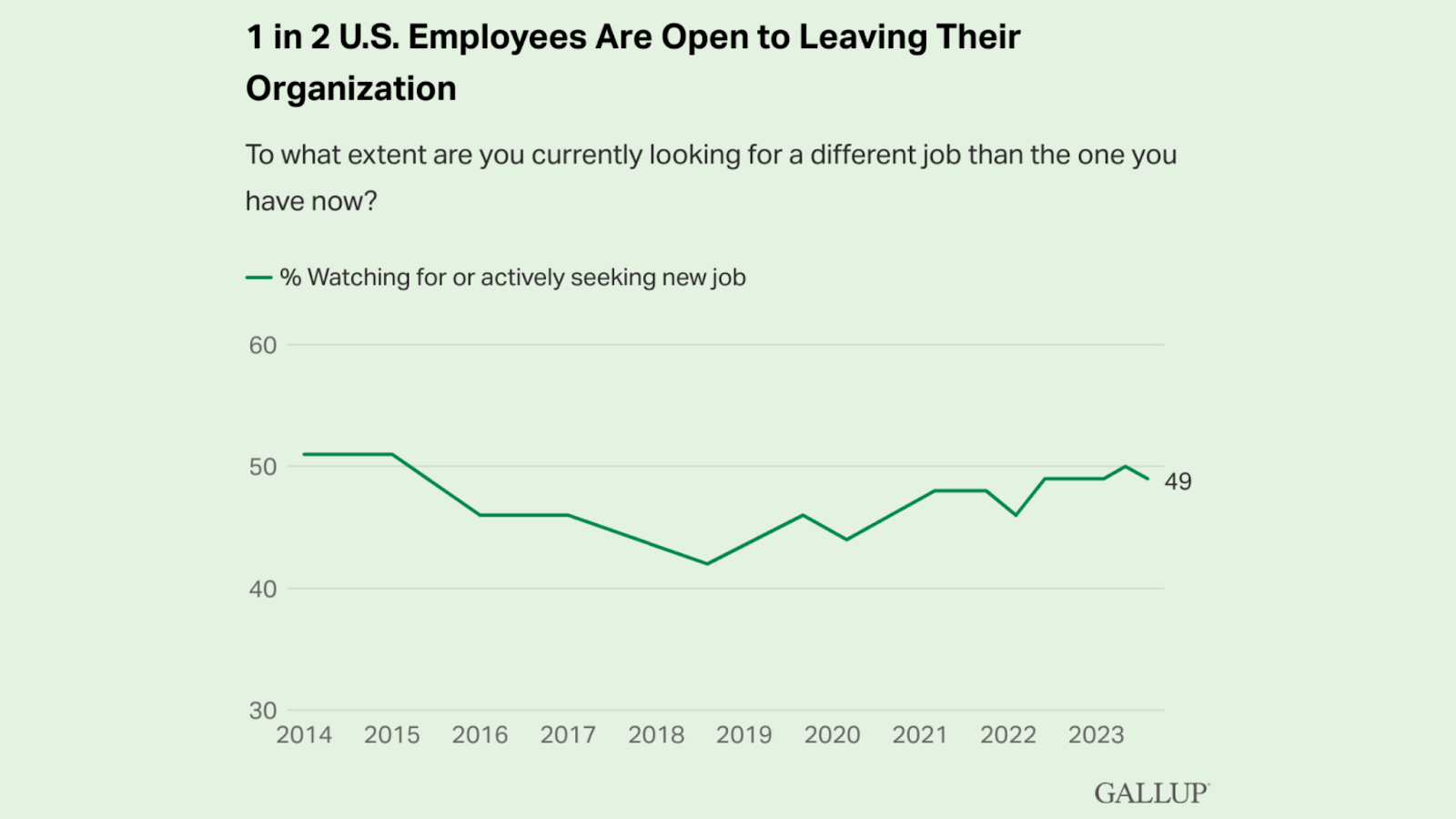
This phenomenon, commonly called job hopping — when employees find new work after a short stint at their current company — is extremely costly for employers and is frustrating, and confusing for a team. So, what exactly is going wrong with your new hires?
In this article, we’ll examine practical tips for employers to mitigate the risk of job-hopping employees, such as offering learning programs and revisiting remuneration strategies. Finally, we’ll lay out a strong retention strategy businesses can use to curb employee turnover and even help settle the turbulent job market.
What is Job Hopping?
Before diving into why people leave jobs quickly, it’s important to understand how ideas around short tenure have changed over time. Job hopping is not new. Young workers of previous generations also experienced high turnover at the beginning of their careers, with the Boomer Generation having held 5.6 jobs on average between 18 and 24 years old. However, this changed when workers in this generation passed the age of 25. In the past, the length of a worker’s tenure was tied to their age at the start of the job. This means the older someone was when starting a job, the longer they stayed there.
Conversely, millennials are now between 27 and 42 years old and have never stopped job hopping. Unlike previous generations who found a stable career as they entered adulthood, the current generation, making up the largest chunk of the workforce, has not settled into long-term jobs. Now, millennials are 3x more likely to job-hop than any other generation, and 21% of millennials have changed jobs within the past year alone.
In fact, today, short tenures have become common enough that job hopping is no longer a red flag. 61% of US workers were expected to change jobs in 2023, meaning that recruiters eliminating candidates based on short tenures would have difficulty finding someone suitable for the role.
So, Why Do Workers Job Hop So Much?
Unfortunately, this higher turnover rate and lack of engagement are costly for employers. Yet, understanding why people leave jobs quickly gives employers a fantastic opportunity to develop strategies to increase retention.
Promotions and Salary Increases
Employees today are not afraid to leave companies quickly for better opportunities. Pew Research found that 63% of workers cite low pay and no options for career advancement as why they quit — and this quitting pays off. Job hopping has proved to be the quickest and most effective way for professionals to increase their salaries. Research shows that new jobs offer a 10-20% increase in pay, whereas internal promotions garner a measly 2-3% raise. With these numbers, switching jobs every two to three years could lead to a 100% pay increase over a decade.
Companies that are slow to offer promotions also risk losing stellar team members. Typically, when people are ready for career advancement, they start looking for opportunities inside and outside their companies, meaning that 29% of people quit within a month of receiving a promotion. When an employee’s value is recognized within their existing company, it may be too late. Additionally, if newly promoted team members do not feel fairly compensated or supported for the role’s new responsibilities, they are also likely to quit.
The Pandemic’s Role
The uptick in frequent job changes can also be partially attributed to the pandemic shifting employee priorities. During this unprecedented time, people who were removed from their working environments (working remotely or unemployed) rediscovered what they wanted in a job. For many workers, how a job makes them feel became a deciding factor.
Employees who feel disconnected from their company or undervalued are disengaged and more likely to leave. Gallop found that only 29% of millennials feel engaged at work, meaning that only three out of ten Millennial employees feel connected to their jobs and company.

The (Literal) Cost of Job Hopping
High levels of employee turnover are estimated to cost US businesses $1 trillion, with the cost of replacing just one employee ranging from 1.5x to 2x that employee’s annual salary. If a company needs to replace a technical position or an executive, the turnover cost can be as high as 100% to 213% of those individuals’ salaries.
The cost per hire, such as time and resources dedicated to finding new employees, is only half the story. Unfilled roles also negatively affect the company’s productivity and team members. Researchers have found that the cost of vacancies accounts for two-thirds of the sunk cost lost to turnovers, including productivity, knowledge, and burnout for team members picking up the extra slack.
When looking at the numbers, it’s clear that businesses must take job hopping seriously. Cultivating environments that help employees feel valued, satisfied, and engaged are integral for ensuring strong employee retention.
Strategies to Improve Employee Retention
When implementing ways to improve employee retention, it’s important to remember that company culture and employee personality will vary. The types of professionals your company attracts, and the nature of your industry will shape how you implement these retention strategies.
Fine Tune Your Recruiting Strategy
Tackling job hopping starts at the beginning: the application. When crafting a job post, accurately present your company and its culture to attract people likely to fit in.
Be sure to ask the right questions during interviews to determine if potential candidates will genuinely be happy with your company and the compensatory benefits. Keep an eye out for red flags during the interview or in resumes and CVs that could signal flightiness.
It may also be worth conducting a competitor analysis to ensure your organization offers industry-standard salaries and benefits. Partnering with a recruiting agency like The Hiring Advisors improves recruitment strategies to find the best possible talent for your company. Our expert recruiters offer free consultations.
Competitive Salaries For Future & Current Employees
When determining a competitive salary, calculate the median salaries for similar positions at other organizations and conduct thorough market research. Having set pay structures and transparency can also help team members have realistic wage expectations.
While offering competitive salaries to attract new talent to help ensure a long tenure, you cannot overlook your current staff. It is essential to benchmark internal salaries to fairly assess raises. Many employees expect raises to increase with the cost of living in addition to recognizing their hard work.
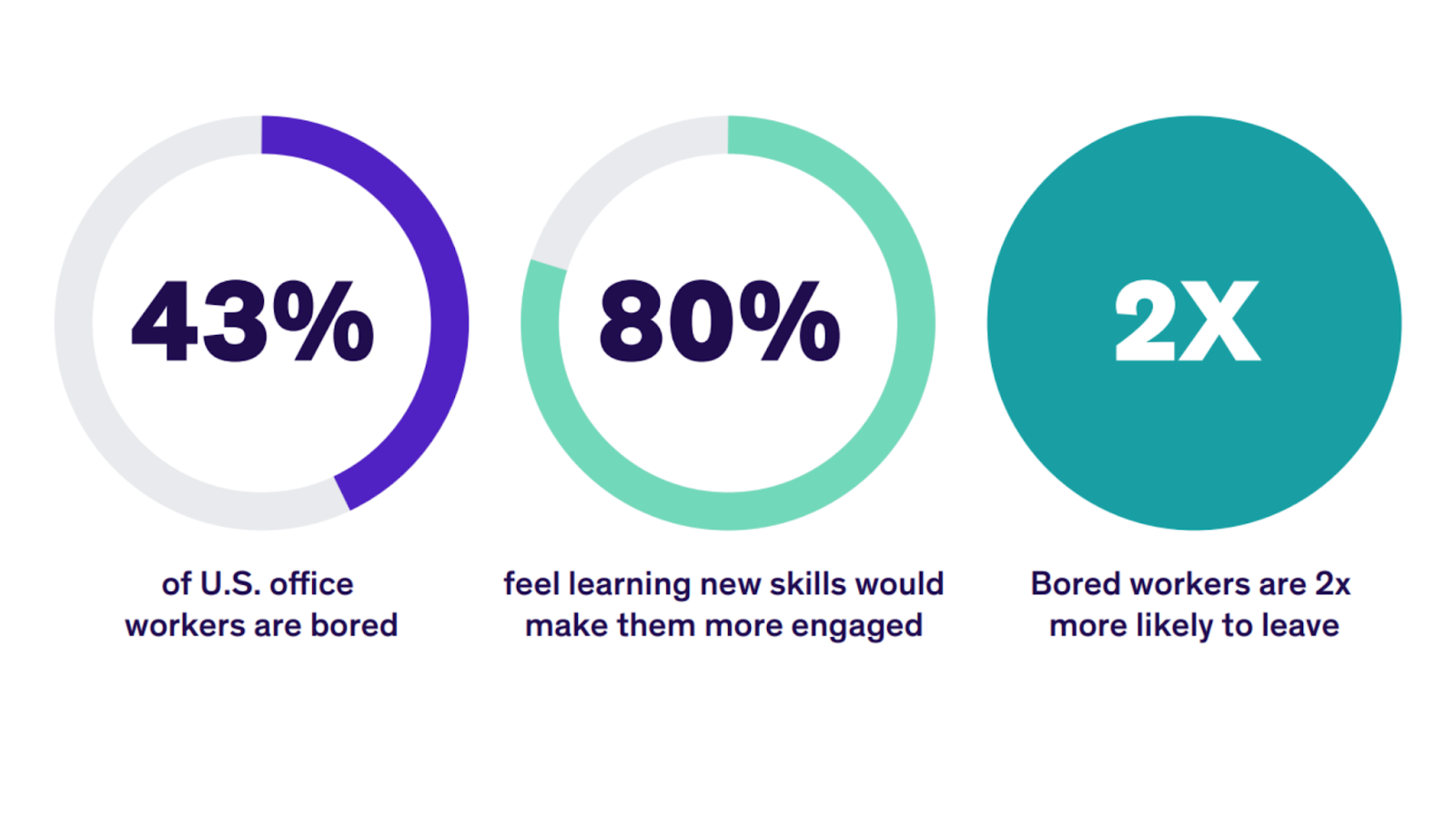
Offer Opportunities for Growth & Development
One of the major drivers of engagement is a team member’s personal view of their future. A common reason people quit is the lack of career advancement (and the raises promotions bring).
Employees who feel stuck with no room to grow personally and financially may look for opportunities elsewhere. When employees are bored, they are disengaged and twice as likely to leave companies.
However, 80% of workers feel training programs would help them stay engaged, and the facts back this sentiment. When offering development and learning opportunities, companies found a 54% increase in immediate retention when helping employees grow professionally.
Explore More Diverse Benefits
When selecting benefit packages, remember that benefits are not a one-size-fits-all.
Think of the types of employees your company culture attracts. While competitive childcare and paternity leave may appeal to people with children, Millennial and Gen Z workers might be more interested in competitive paid time off and pet insurance.
Offering different package options that cater to specific employee demographics can help team members feel like their needs are being met and mitigate any inclinations to search for a new job.
Alternatively, more unique benefits and programs can also help improve engagement. Companies with employee wellness programs, for example, found that 89% of employees felt more engaged and happy at work.

Support Better Work-Life Balance
In post-pandemic work, more people than ever want flexibility despite employer pushback. Gen Z and Millennials want to work on their terms so much that 76% of young professionals plan to start their own businesses. While the remote work debate unfolds, flexibility comes in many forms.
Hybrid options and thoughtful remote planning are great ways to give workers more flexibility. Planning strategically when team members need to work together and who they work with can also help increase flexibility and keep remote days running smoothly.
Planning meetings in advance gives employees more control in scheduling personal plans, and connecting asynchronously through project management software can reduce the need for meetings. Breaking larger projects into smaller pieces that require teams with fewer people gives employees more flexibility when scheduling co-working sessions.
Also, consider ways to respect employees’ time when they’re off the clock, especially for salaried employees. Setting hours for non-emergency communications and limiting last-minute tasks within reason help create a better separation between work and personal time.
Company Culture Matters More Than Ever
People value company culture more than ever, with 89% of people actively looking for empathetic companies. During the pandemic, people lost the human element of work. The connection and community that people find at their jobs is so important, in fact, that a growing number of workers prefer hybrid work to purely remote work. Hybrid work strikes a balance between flexibility and the need for connection.
However, people want the right types of human interaction — not drama and petty grievances. Workers aren’t afraid to leave early in their tenure if the company culture isn’t a good fit.
Beyond typical team-building exercises, gatherings, and charity sponsorship events, fundamentally shifting everyday culture to help employees feel heard and valued can improve retention.
Offering employee feedback and recognizing accomplishments has also been found to dramatically improve engagement and productivity. Embracing transparency, employee feedback, and thoughtful inclusivity practices are also great ways to make sure team members feel comfortable and connected with company culture.

Building a Future of Job Stability
While job hopping is a frustrating and costly occurrence for companies, employers can strengthen their teams by adapting to the new needs of the workforce, anticipating shorter tenures, and putting strategies in place to lengthen them. Ultimately, adaptability is the best strategy for continued employee retention, engagement, and business success.
As generations with different experiences and personalities enter and leave the workplace, job expectations will inevitably change. Adapting benefits, structure, and culture to meet the changing needs of employees will help businesses not only retain top talent but also help employees settle into positions longer, stabilizing the job market.